
Mon-Fri 9am-5:30pm
Sat & Sun CLOSED
Mon-Fri 9am-5:30pm
Sat & Sun CLOSED
Resource efficiency, not just recycling, is at the heart of a new push connecting Turkish polar research with London’s climate network, in a move that signals how circular economy thinking is increasingly shaping the run-up to COP31.
The Zero Waste Foundation has spent August building bridges between Türkiye’s scientific research programme and London’s climate diplomacy scene, through two separate but connected developments that will matter to anyone tracking how energy, water and logistics are managed in resource-intensive settings.
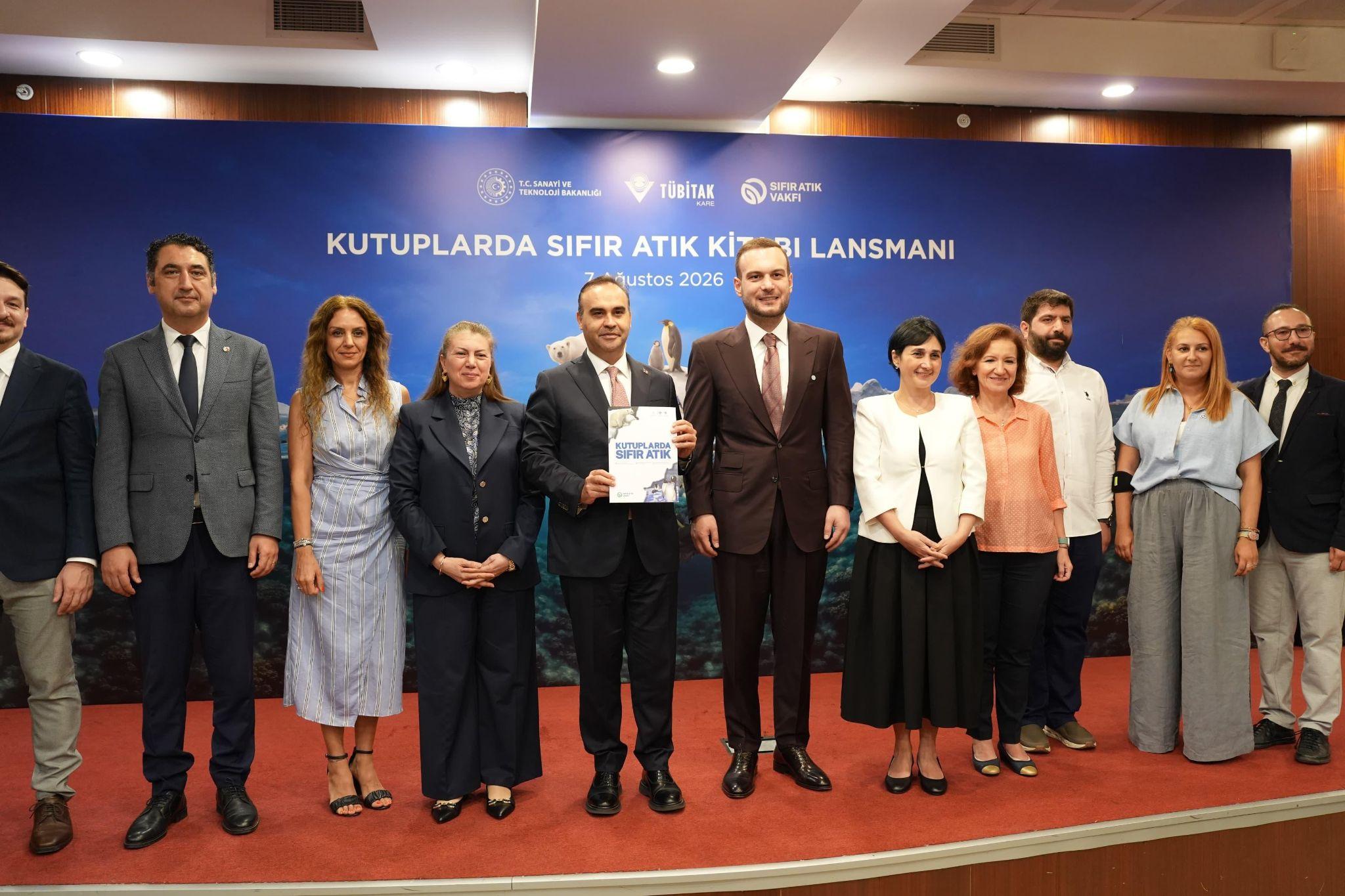
On 7 August, the Foundation launched “Zero Waste in the Polar Regions”, a book prepared jointly with the Polar Research Institute run by TÜBİTAK, the Scientific and Technological Research Council of Türkiye. The publication applies zero waste principles to scientific work in the Arctic and Antarctic, drawing on 18 articles from scientists who have taken part in polar expeditions.
For a green energy audience, the most relevant part of the book is not its waste focus but its resource management scope. It goes beyond how waste is collected in polar research stations and examines how scientific expeditions are planned, how materials are sourced, and critically, how energy, water and logistics are managed in some of the most extreme and remote research environments on the planet. The underlying principle is prevention: reducing waste before it is generated and using resources efficiently, rather than managing consequences after the fact.
The book frames the polar regions as key indicators of global climate change, arguing that environmental shifts recorded there carry consequences well beyond the Arctic and Antarctic themselves. That framing gives the research a relevance that extends past the geography where it was conducted, into broader conversations about resource use and environmental footprint in scientific and industrial settings more generally.
Mehmet Fatih Kacır, Minister of Industry and Technology of Türkiye, said the book unites two national initiatives that both started in 2017. “The Zero Waste initiative launched under the leadership of H.E. Emine Erdoğan has grown step by step from a national initiative into a global one,” he added.
“At the same time, we began organising scientific expeditions to Antarctica and the Arctic under the auspices of the President of the Republic of Türkiye, enabling Turkish scientists to strengthen the country’s presence in polar research. Through this book, these two initiatives have come together.”
The study also reflects the wider zero waste vision advanced by H.E. Emine Erdoğan, Founder of the Zero Waste Movement, Chair of the UN High-Level Advisory Board on Zero Waste and Honorary President of the Zero Waste Foundation.
Ten days after the book’s launch, on 17 August, the Foundation and London Climate Action Week signed a cooperation protocol covering climate action, zero waste and the circular economy. The agreement establishes an institutional partnership intended to strengthen knowledge exchange, joint initiatives and international dialogue on these themes.
The protocol was signed by Samed Ağırbaş, President of the Zero Waste Foundation and COP31 High-Level Climate Champion, and Nick Henry, Climate Action Founder and CEO.
“After this cooperation protocol, I hope we will carry out strong work and organize joint events at COP31 and London Climate Action Week,” Ağırbaş said.
London Climate Action Week draws participants from government, cities, business, finance, academia, civil society and local communities, making it a significant node in the international climate calendar. The agreement gives Türkiye’s zero waste and circular economy work a direct route into that network, ahead of COP31, which Türkiye is set to host.
COP31 supplies the wider diplomatic context for this cooperation, though the immediate focus is on practical exchange between the Foundation and the LCAW network rather than headline commitments. For green energy observers, the combination is notable because it links scientific research, resource efficiency and circular economy thinking directly to international climate action, rather than treating zero waste as simply a matter of recycling or waste disposal.
That distinction matters. Energy, water and logistics management in remote research settings such as the Arctic and Antarctic offer a useful proving ground for resource efficiency principles that can be applied far more widely, in industry, in cities and in national infrastructure planning. By tying this work to a formal partnership with London Climate Action Week, the Foundation is positioning zero waste and circular economy approaches as part of the broader climate action toolkit being discussed in the lead-up to COP31, rather than a separate or secondary strand of environmental policy.
The next test will be whether the cooperation translates into joint events and concrete initiatives at COP31 and future editions of London Climate Action Week, as Ağırbaş has indicated he hopes it will. For now, the book and the protocol together mark a deliberate effort to connect polar research findings on resource efficiency with the international institutions shaping climate policy, at a moment when Türkiye’s role in that policy landscape is set to grow significantly.





Big Green Switch is a trading style of Perfect Sense Energy.

© 2026 Perfect Sense Energy t/a Big Green Switch. All rights reserved.