
Mon-Fri 9am-5:30pm
Sat & Sun CLOSED
Mon-Fri 9am-5:30pm
Sat & Sun CLOSED
Contributed content: this article was written by a third-party contributor and does not necessarily reflect the views of Big Green Switch. Editorial and Advertising Policy
When people think about reducing their carbon footprint, the conversation tends to land quickly on energy tariffs, home insulation, or what to drive next. The car parts decision, specifically, whether to fit a new component or a tested used one, rarely comes up. And it should.
The reason it matters comes down to where a car’s carbon actually lives. Manufacturing an average internal combustion engine vehicle produces around 5.6 tonnes of CO₂ before it ever leaves the factory, with steel and aluminium, the main materials in engines, gearboxes, suspension and body panels, accounting for the bulk of that figure. Every major component on a modern BMW represents a share of that manufacturing footprint: the raw material extraction, the smelting, the precision machining, the surface treatment, the shipping. When a working component gets reused rather than replaced with a new one, that slice of manufacturing carbon simply doesn’t happen. The part already exists. The energy to produce it has already been spent.
This is a meaningfully different proposition from recycling. Recycling a steel or aluminium component is genuinely better than sending it to landfill, but it still requires melting the material down, re-processing it and manufacturing something new from it, an energy-intensive process in its own right. Reuse skips all of that. The waste hierarchy that underpins environmental regulation in the UK recognises this distinction, treating reuse as the preferable outcome to recycling wherever it’s achievable. For large automotive components, an engine block, a gearbox, a set of alloy wheels, the gap between the two outcomes is considerable.
There’s a common assumption that buying second-hand BMW parts means accepting unknown provenance and unknown condition. At the less organised end of the market, that’s sometimes true. At the specialist end, it isn’t.
Reputable BMW spares specialists source stock from end-of-life vehicles that are no longer worth repairing as a whole car but still carry components with substantial usable life. Parts are removed carefully, assessed, cleaned, tested where appropriate, and catalogued with the original vehicle’s generation and model code recorded, so a buyer can confirm before ordering that the car spares they’re looking at will actually fit their car.
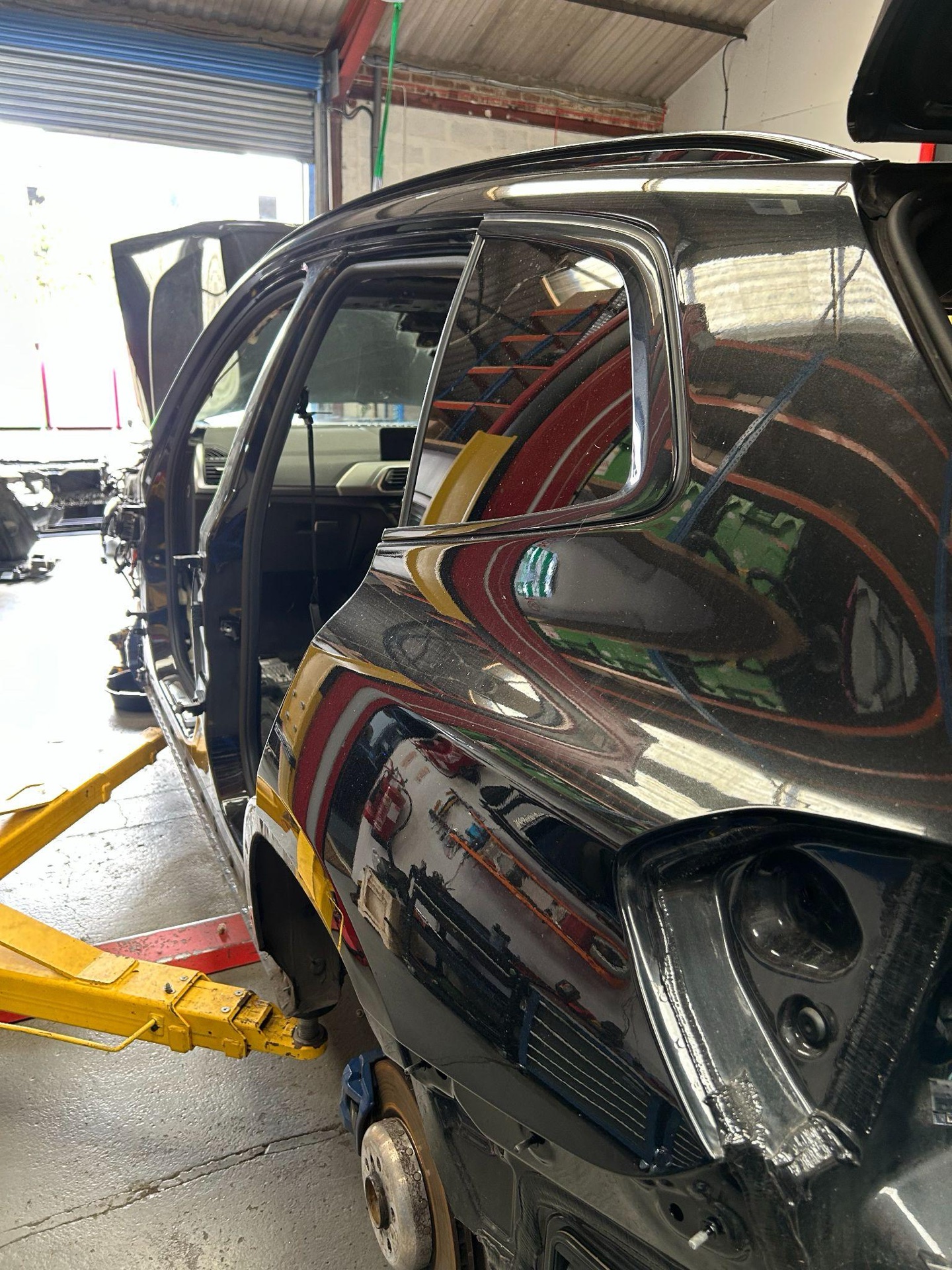
MT Auto Parts, based in Thurnscoe, South Yorkshire, operates on exactly this model. As a specialist in F, G and U-generation BMWs, models produced from 2012 onwards, it stocks and sells genuine used BMW car parts across the full range of major component categories: engines, automatic gearboxes, alloy wheels, lighting, drivetrain and suspension components, electrical parts, interior trim and body panels. Every listing states the part type and condition clearly.
If you need replacement parts for a BMW, an engine, a gearbox, a suspension component, the environmental comparison between fitting a new part and a tested used one isn’t close. The new part carries the full manufacturing carbon of producing that component from raw materials. The used part carries the carbon of testing, cleaning and delivering it, which is a fraction of that figure.
For the environmentally motivated buyer, that decision sits in the same category as switching to a greener energy tariff or choosing a more efficient appliance: it’s a practical action with a real carbon consequence, taken at a moment when the choice is actually available. Most people don’t get to make it deliberately because they don’t think of BMW second-hand spare parts as an environmental option; they think of them as a budget option. The truth is they’re both.
The UK’s parc of post-2012 BMW models is large and ageing. As more of these vehicles reach the end of their useful life as a whole, the pool of high-quality components that can be dismantled and put back into circulation grows alongside it. A single end-of-life BMW can yield dozens of usable parts: none of those components needed to be manufactured new, and none of them needed to be melted down and reprocessed.
For drivers who already think carefully about energy and emissions, adding the car parts decision to that framework is a logical next step. MT Auto Parts delivers across the UK mainland within 24 to 48 hours, backs most BMW spares with a 30-day warranty, and offers free standard delivery on items under 20kg. More information is available at mtautoparts.com.





Big Green Switch is a trading style of Perfect Sense Energy.

© 2026 Perfect Sense Energy t/a Big Green Switch. All rights reserved.